
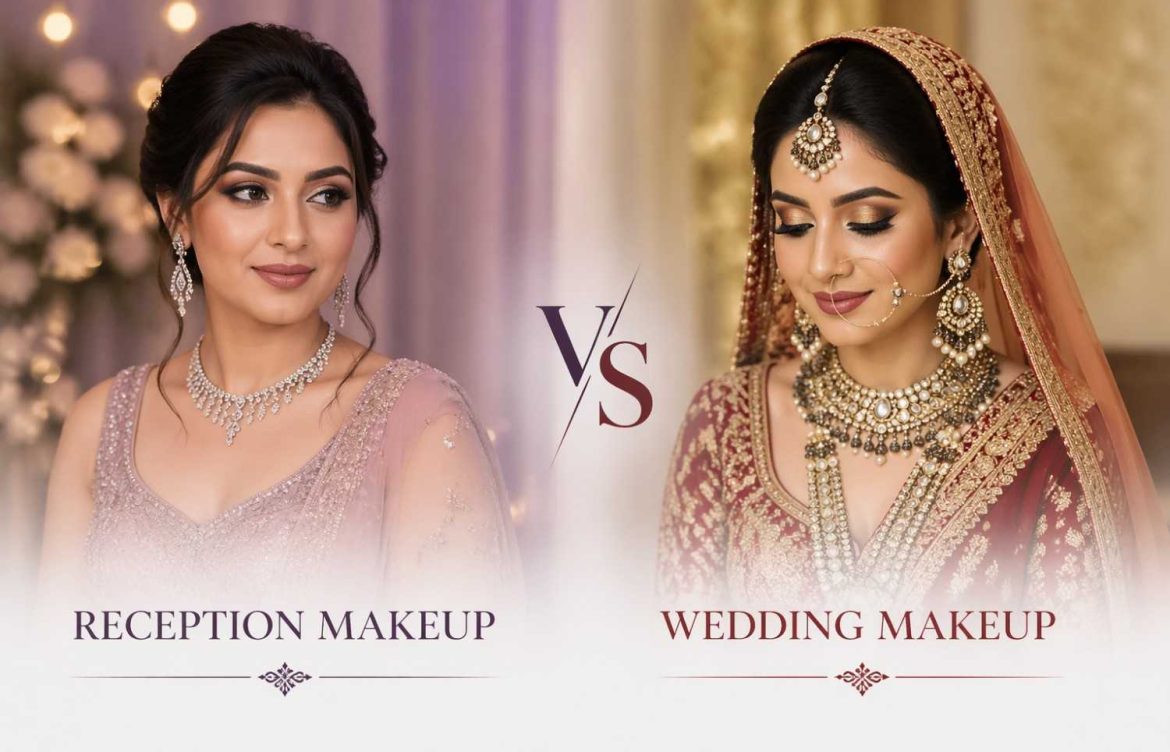
Reception Makeup vs Wedding Makeup: What’s the Difference
You have selected your outfits, finalized your venue, and planned every detail of your celebration. Yet when it comes to your beauty look, many brides hesitate. Should you wear the same style for both events, or create two distinct looks? Understanding reception makeup vs wedding makeup is essential because each occasion has unique lighting, photography, and styling requirements. The ceremony calls for timeless elegance and long-lasting formulas that perform in natural daylight, while the reception demands glamour and definition that stand out under artificial lighting.
This guide explains the real difference, helping you choose the perfect look for each event without compromising comfort, longevity, or style.
Reception Makeup vs Wedding Makeup: What’s the Real Difference?
The core distinction between these two looks lies in purpose, environment, and visual impact. Wedding day makeup is engineered for endurance. It must withstand long rituals, emotional moments, unpredictable weather, and hours of photography while maintaining a fresh, natural appearance. Reception makeup, by contrast, is designed for celebration. It embraces drama, shimmer, and intentional intensity to complement evening attire, heavy jewelry, and dim venue lighting.
The difference between wedding and reception makeup is not about one being better than the other. It is about matching your makeup to the technical and emotional demands of each event. Wedding makeup prioritizes skin-like texture, subtle definition, and formulas that resist sweat and tears. Reception makeup focuses on sculpted features, strategic highlighting, and color choices that pop under flash photography. Understanding this foundation helps you communicate clearly with your artist and avoid last-minute adjustments.
Key Factors That Affect Wedding vs Reception Makeup (Lighting, Photography & More)
Several behind-the-scenes factors determine why these two looks require different approaches:
- Lighting Temperature: Natural daylight has a color temperature of approximately 5500K, which reveals true tones and texture. Artificial venue lighting ranges from warm 2700K to cool 4000K, which can alter how colors appear on camera.
- Photography Style: Ceremony photos often use natural light or soft fill flash, requiring makeup that looks seamless up close. Reception photos frequently use direct flash or mixed lighting, demanding more definition to prevent features from flattening.
- Duration and Activity: Wedding ceremonies involve sitting, standing, and emotional moments over several hours. Receptions include dancing, dining, and socializing, which generate heat and movement that challenge makeup longevity.
- Outfit Weight and Texture: Ceremonial outfits often feature lighter fabrics and delicate embroidery that pair well with soft makeup. Reception attire typically includes heavier silks, sequins, or metallic work that benefit from bolder beauty choices.
Recognizing these technical elements helps you make informed decisions rather than guessing based on trends alone.
Wedding Makeup for Day Function: Best Bridal Look for Daytime Ceremonies
Daylight is the most revealing light source. It exposes texture, heavy layers, and mismatched undertones instantly. A wedding makeup look for day function must prioritize translucency, balance, and longevity. Because natural sunlight washes out color, overly bright pigments can appear harsh or artificial. Instead, focus on hydrated skin preparation, color-correcting primers, and soft blending techniques that enhance rather than mask your features.
Skin Preparation for Daylight Ceremonies
Proper preparation is the foundation of any successful wedding makeup look. Follow this structured approach to ensure your base performs flawlessly in natural light:
| Prep Step | Purpose | Execution Method | Recommended Ingredients |
| Gentle Cleansing | Remove impurities without stripping natural oils | Use a cream or milk cleanser with lukewarm water | Ceramides, glycerin, oat extract |
| Hydration Layering | Plump skin and create a smooth canvas | Apply toner to damp skin, follow with serum and moisturizer | Hyaluronic acid, panthenol, squalane |
| Color Correction | Neutralize redness or pigmentation before foundation | Use peach corrector for dark circles, green for redness | Lightweight, blendable cream formulas |
| Primer Application | Extend wear and improve foundation adhesion | Apply a hydrating or blurring primer based on skin type | Dimethicone alternatives, niacinamide |
| SPF Integration | Protect skin without causing flashback | Use a lightweight, non-white-cast sunscreen | Zinc oxide, titanium dioxide in micronized form |
Product Selection for Natural Light Photography
Cream-based products perform better than powders during morning hours. Cream blushes, liquid highlighters, and satin-finish foundations melt into the skin and move naturally with facial expressions. Waterproof mascaras and smudge-proof liners are non-negotiable for emotional moments. The goal is a polished, timeless appearance that photographs beautifully from every angle without looking overdone or cakey. This approach ensures you feel like yourself while still looking camera-ready throughout the ceremony.
Reception Makeup for Night Function: Glam Look for Evening Brides
Artificial lighting behaves completely differently than natural sunlight. Fluorescent bulbs can flatten dimension, while warm indoor spots may make heavy makeup appear muddy or orange. Reception makeup for night function requires strategic amplification to ensure your features remain defined and vibrant. You will need slightly deeper eyeshadow placement, a sharper lip outline, and more pronounced contouring to prevent your face from disappearing under dim or mixed lighting conditions.
How to Apply Makeup for Reception
Evening venues often combine multiple light sources, which can create uneven shadows or color casts. To maintain a flawless finish under these conditions:
- Increase Coverage Slightly: A medium-to-full coverage foundation helps create a uniform canvas that resists looking patchy under mixed lighting.
- Set Strategically: Use a finely milled setting powder only on areas prone to oiliness. Leave cheeks and high points slightly dewy to catch ambient light naturally.
- Amplify Dimension: Add a touch more contour along the jawline and temples to prevent your face from appearing flat under overhead lighting.
- Choose Flash-Friendly Formulas: Avoid products with large glitter particles or SPF minerals that can cause white cast in flash photography.
Best Eye & Lip Makeup for Reception Look
Highlighters should be finely milled to avoid a glittery or chalky finish under flash photography. Setting sprays with flexible polymers keep the base intact through dancing, temperature shifts, and prolonged wear. This approach guarantees a radiant, camera-ready finish that holds up until the final photo. The key is intentional intensity: every product choice should serve the purpose of looking polished and glamorous in an evening setting without feeling heavy or uncomfortable.
Wedding Makeup vs Reception Makeup (Side-by-Side Comparison Guide)
Choosing between bridal makeup for wedding vs reception requires evaluating your outfit weight, jewelry density, and event timeline. To help you plan confidently, here is a detailed comparison of how each look performs across key beauty categories. This table clarifies the difference between wedding and reception makeup so you can select formulas and techniques that align with each event’s unique demands.
| Beauty Category | Wedding Ceremony Approach | Reception Approach | Why This Difference Matters |
| Base Finish | Lightweight, breathable, dewy-satin for natural light | Medium-to-full coverage, velvety, long-wear for artificial lighting | Daylight reveals texture; evening lighting benefits from perfected canvas |
| Eye Intensity | Soft definition, natural lashes, neutral-warm tones | Smoky or lined eyes, fuller lashes, deeper shades for dimension | Natural light enhances subtle definition; flash requires stronger contrast |
| Lip Formula | Stain or matte for ritual longevity and minimal touch-ups | Creamy matte or glossy for evening glamour and photo impact | Ceremonies need transfer-resistant formulas; receptions allow for richer textures |
| Contour and Highlight | Soft sculpting, subtle glow that reads naturally in daylight | Defined bone structure, strategic metallic shimmer for flash photography | Subtle dimension prevents harsh shadows in sun; shimmer catches evening light |
| Setting Method | Hydrating mist plus light powder to preserve skin texture | Heavy-duty setting spray plus targeted powder touch-ups for endurance | Day events prioritize comfort; night events demand maximum hold |
| Outfit Harmony | Complements light pastels, silks, or traditional ceremonial wear | Balances heavy embroidery, sequins, or dark-toned reception attire | Makeup should enhance, not compete with, your outfit’s visual weight |
This structured comparison helps you understand why reception makeup vs wedding makeup requires different product choices and application techniques. Consistency in preparation does not mean identical execution. Each look serves a distinct purpose, and recognizing that difference is the first step toward flawless results.
Which Makeup is Best for a Reception Bride? Expert Tips
The best formula for your reception depends on your personal style, but most experts recommend a polished, medium-coverage base with intentional focal points. If you choose a bold lip, keep the eyes soft with neutral shading and clean liner work. If you prefer dramatic eyes, opt for a softer lip color to maintain balance. The goal is harmony, not competition between features.
Formula Recommendations by Skin Type
| Skin Type | Foundation Finish | Eye Product Focus | Lip Strategy | Setting Approach |
| Dry Skin | Hydrating satin or dewy liquid | Cream shadows to prevent flaking | Creamy matte or gloss with balm base | Hydrating setting spray only |
| Oily Skin | Matte or natural finish with oil control | Waterproof liners and mascaras | Long-wear liquid lipstick with primer | Powder on T-zone plus setting spray |
| Combination Skin | Natural finish with targeted powder | Blend of cream and powder products | Satin finish lipstick for comfort | Powder on oily zones, mist overall |
| Sensitive Skin | Fragrance-free, minimal ingredient formulas | Hypoallergenic mascaras and liners | Lip stains with soothing ingredients | Gentle setting mist without alcohol |
For reception makeup, prioritize products with buildable coverage and flexible wear. Liquid foundations with a satin or natural finish adapt well to changing lighting conditions. Cream blushes and bronzers blend seamlessly and resist cakiness under flash photography. When selecting your reception look, consider your outfit’s neckline and jewelry weight. Heavy embroidery or statement earrings call for a slightly more defined base to prevent your features from receding visually.
Simple Reception Makeup vs Heavy Bridal Makeup: What Should You Choose?
Many brides wonder whether they should opt for a dramatic ceremony look and a softer reception style, or vice versa. The answer depends on your outfit changes, venue lighting, and personal comfort. Simple reception makeup vs heavy bridal makeup is not about right or wrong. It is about intentional styling that complements each phase of your celebration.
How to Choose Between Simple vs Heavy Bridal Makeup
Use this guide to determine which approach aligns with your specific celebration:
Choose Heavy Bridal Makeup for Ceremony If:
- Your ceremony outfit features intricate embroidery, heavy jewelry, or bold colors that benefit from defined features
- Your venue has mixed or challenging lighting that requires more dimension to photograph well
- You prefer a polished, camera-ready look from the moment you walk down the aisle
- You plan minimal touch-ups between events and want your ceremony look to transition smoothly
Choose Simple Reception Makeup If:
- Your reception outfit is heavily embellished and you want your face to complement rather than compete
- You plan to dance, dine, and socialize actively and prefer a comfortable, low-maintenance finish
- Your venue has soft, flattering lighting that does not require intense definition
- You want to refresh your look with a lip change or eye accent rather than a full reapplication
If your ceremony outfit is heavily embroidered or features intricate detailing, a softer makeup look allows your attire to take center stage. Conversely, if your reception outfit is bold or features dramatic colors, a more defined makeup application ensures your face remains the focal point in photographs. The key is balance: let one element lead while the other supports. This approach prevents visual overload and ensures you feel confident and comfortable throughout both events.
Can You Use the Same Makeup for Wedding and Reception?
Technically, yes, you can use the same makeup for both events. However, practical considerations often make two distinct looks more effective. Wedding makeup vs reception makeup differs in lighting requirements, outfit styles, and photography conditions. If you choose to keep one look, plan for strategic touch-ups between events.
Touch-Up Strategy for a Single-Look Approach
If you prefer to maintain one makeup style throughout your celebration, follow this structured refresh routine:
- Blot and Reset: Use blotting papers to remove excess oil from the T-zone without disturbing your base.
- Refresh Coverage: Lightly press a small amount of concealer or foundation onto areas that show wear, such as under the eyes or around the nose.
- Reintensify Features: Redefine your eyeliner, add a coat of mascara, or deepen your eyeshadow crease to restore dimension.
- Revive Lips: Remove any residual lip color, reapply lip liner for precision, and add your chosen lipstick or gloss.
- Set and Glow: Finish with a hydrating setting mist to fuse layers together and restore a natural radiance.
Carry a small kit with blotting papers, a pressed powder for oily zones, a lip color for reapplication, and a hydrating mist to refresh your base. Focus touch-ups on areas that show wear first: under eyes, around the nose, and the lip line. If your ceremony looks too soft for the reception, intensify your eyeliner, add a layer of mascara, or deepen your lip color for instant evening glamour. This flexible approach gives you the best of both worlds without requiring a full makeup change.
Reception Makeup Look for Indian Bride
Regional considerations play a significant role in makeup performance. A reception makeup look for an Indian bride must account for heavy jewelry, richly embroidered outfits, and varying climate conditions across the subcontinent. The goal is a finish that complements traditional attire while remaining photogenic under diverse lighting.
Climate-Adaptive Product Selection
| Climate Condition | Base Recommendation | Eye Product Focus | Setting Strategy |
| Humid Coastal | Oil-free, sweat-resistant foundation | Waterproof liners and mascaras | Long-wear setting spray with humidity control |
| Dry Northern Winter | Hydrating liquid foundation with ceramides | Cream shadows to prevent flaking | Hydrating mist plus minimal powder |
| Hot Inland Summer | Lightweight, breathable matte or natural finish | Smudge-proof gel liners | Oil-control powder on T-zone plus setting spray |
| Monsoon Season | Transfer-resistant, quick-dry formulas | Fully waterproof eye products | Heavy-duty setting spray with film-forming polymers |
Start with a well-prepped base. Indian skin tones often benefit from color-correcting primers to neutralize pigmentation or redness before foundation application. Choose a foundation shade that matches your neck and chest to avoid visible lines in photographs. For eyes, warm browns, deep plums, and gold tones enhance brown eyes beautifully while remaining versatile across outfit changes. Lips in berry, wine, or classic red provide timeless elegance that photographs well under both natural and artificial light.
Climate adaptation is essential. In humid regions, prioritize sweat-resistant formulas and lightweight layers. In drier climates, focus on hydration and barrier-supporting products to prevent flaking. Always do a trial run in similar lighting conditions to your venue. This ensures your reception makeup look for the Indian bride performs exactly as expected on the big day.
Wedding vs Reception Makeup: Key Differences You Must Know
To summarize the distinction between wedding makeup vs reception makeup, here is a concise reference table. Use this guide to communicate your preferences clearly with your makeup artist and ensure both looks align with your vision.
| Factor | Wedding Ceremony | Reception | Practical Implication |
| Primary Goal | Timeless elegance, emotional resilience | Glamorous impact, camera-ready dimension | Ceremony makeup honors tradition; reception makeup celebrates personality |
| Lighting Environment | Natural daylight, outdoor or well-lit indoor | Artificial lighting, dim venues, flash photography | Daylight requires subtlety; evening lighting benefits from intentional contrast |
| Formula Priority | Tear-proof, sweat-resistant, breathable | Long-wear, blendable, photo-enhancing | Ceremony formulas prioritize comfort; reception formulas prioritize endurance |
| Color Palette | Neutral-warm, soft definition, skin-like tones | Deeper shades, intentional contrast, strategic shimmer | Soft tones photograph naturally in sun; deeper tones prevent flattening in flash |
| Application Time | Longer, meticulous layering for endurance | Moderate, focused on impactful finishing touches | Ceremony prep allows for detailed work; reception prep emphasizes efficiency |
| Touch-Up Needs | Minimal, focused on lip and under-eye refresh | Moderate, focused on shine control and color revival | Plan your touch-up kit based on event demands |
| Jewelry Coordination | Complements delicate or traditional pieces | Balances heavy, statement, or metallic jewelry | Makeup intensity should harmonize with accessory weight |
This comparison clarifies why reception makeup vs wedding makeup requires thoughtful planning. Each look serves a unique purpose, and understanding those purposes ensures you feel confident and beautiful throughout your entire celebration.
Final Tips to Choose Between Wedding and Reception Makeup
Understanding reception makeup vs wedding makeup empowers you to make confident beauty decisions for each phase of your celebration. The ceremony honors tradition, endurance, and natural radiance. The reception look embraces glamour, dimension, and intentional artistry. When you align your makeup with the technical and emotional demands of each event, you ensure a flawless finish that photographs beautifully and feels comfortable throughout.
For personalized guidance on selecting and executing the perfect wedding and reception looks, consult with a licensed professional who understands your skin type, cultural preferences, and styling goals. Aarti Gaikwad Makeup Artist offers expert consultations, customized trials, and tailored application techniques designed to deliver timeless elegance for your ceremony and show-stopping glamour for your reception. With the right preparation and expert support, your makeup will enhance your natural beauty and complement every moment of your special day.
FAQs: Reception Makeup vs Wedding Makeup
What is the difference between wedding makeup and reception makeup?
Wedding makeup is typically more traditional, long-lasting, and slightly heavier to withstand rituals and long hours, while reception makeup is more glamorous, modern, and focused on enhancing your overall look under evening lighting and photography.
Is reception makeup lighter than wedding (bridal) makeup?
Reception makeup is usually lighter or more flexible compared to wedding makeup. While bridal makeup focuses on durability and full coverage, reception makeup allows for softer, dewy, or glam finishes depending on your style and event timing.
Can I use the same makeup look for weddings and receptions?
You can use a similar base, but it’s not recommended to keep the exact same look. Wedding and reception events have different lighting, outfits, and vibes, so adjusting eye makeup, lip color, and finish helps create a fresh and appropriate appearance.
Which type of makeup is best for a reception bride?
The best reception makeup depends on your outfit and event timing, but popular choices include soft glam, dewy makeup, or bold smokey eyes. Evening receptions usually suit radiant, glowing finishes that look stunning under artificial lighting.
Should reception makeup be dewy or matte?
Reception makeup can be either dewy or matte, but a dewy or satin finish is generally preferred for evening events as it reflects light beautifully and gives a radiant glow. Matte finishes work better for oily skin or humid conditions.
What kind of makeup is suitable for a daytime wedding?
For a daytime wedding, bridal makeup should be soft, natural, and slightly matte to avoid excess shine in sunlight. Neutral tones, well-blended base, and subtle highlighting work best for a fresh and elegant look.
How long does wedding makeup vs reception makeup last?
Wedding makeup is designed to last 8–12 hours with minimal touch-ups due to long rituals, while reception makeup also lasts long but may require light touch-ups depending on dancing, lighting, and environmental conditions.
Is airbrush makeup better for weddings or reception?
Airbrush makeup works well for both wedding and reception events because it provides a lightweight, flawless, and long-lasting finish. It is especially ideal for brides who want a smooth, camera-ready look without heavy layering.
What mistakes should brides avoid when choosing reception makeup?
Common mistakes include choosing overly heavy makeup, ignoring lighting conditions, matching the exact wedding look, and not considering skin type. Reception makeup should enhance your features while complementing the outfit and event vibe.
How do I choose the right makeup artist for a wedding and reception?
Choose a makeup artist by checking their portfolio, understanding their expertise in bridal and reception looks, reading reviews, and scheduling a trial. A professional makeup artist will customize your look based on your skin type, outfit, and event needs.